

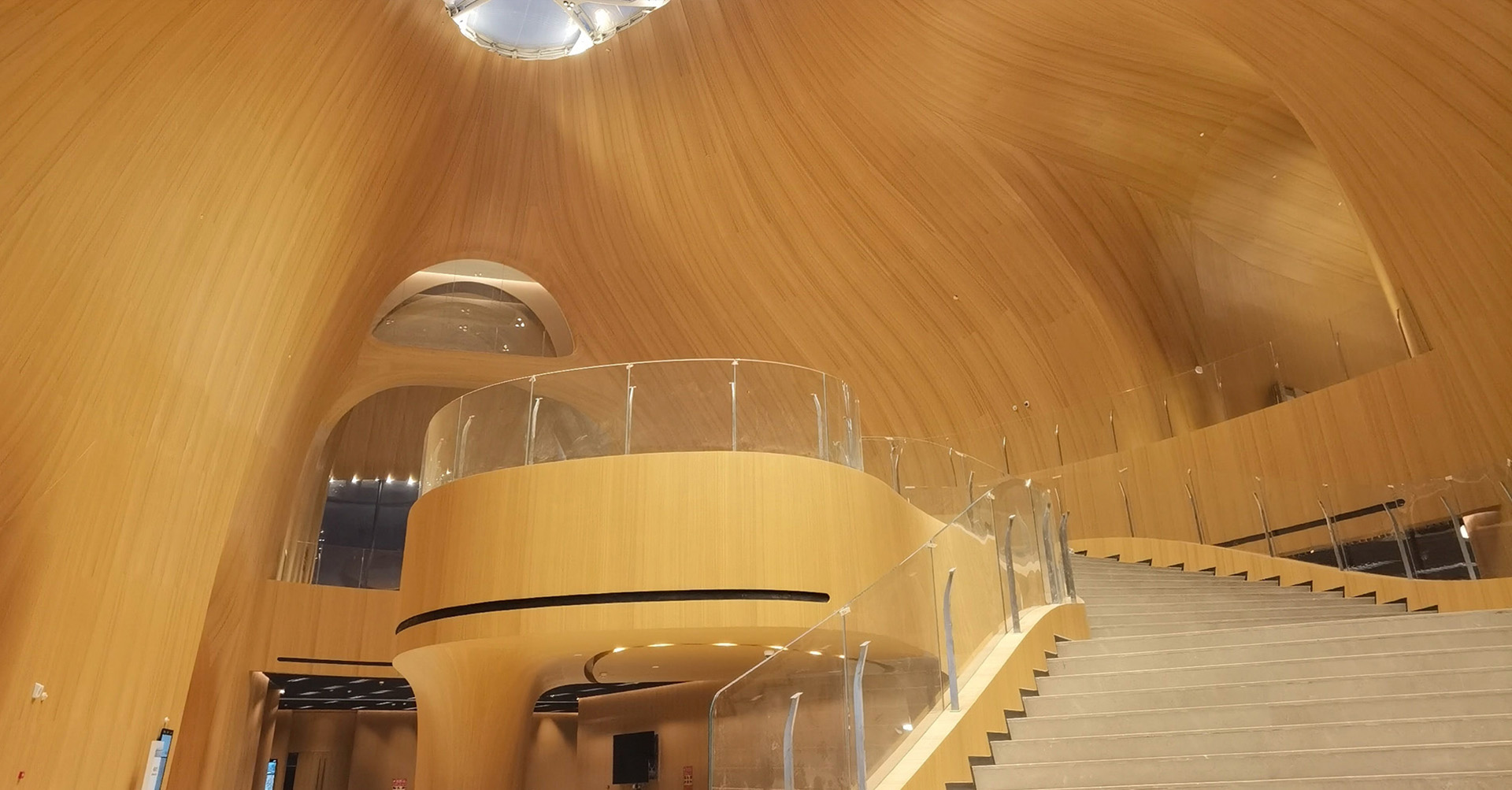
Dimensional wood walls bring texture, warmth, and movement into large public interiors. Instead of a flat plane, the surface changes with light and viewing angle, creating a feature that feels architectural and intentional.
SanFoot is a prefinished natural wood veneer wallcovering that installs in a way similar to vinyl wallcovering, and its multi-ply construction helps it conform to curved walls, columns, and radius corners. When you pair that flexibility with thoughtful detailing, SanFoot can support bold, dimensional wall moments.
Why dimensional texture works at scale
In lobbies, corridors, and public gathering spaces, texture does more than look good. It helps a large interior feel warm, human, and intentionally designed.
- Adds depth across long sightlines without relying on heavy millwork
- Creates a clear feature moment for arrival or wayfinding
- Softens hard architectural volumes with a natural material palette
- Holds visual interest as people move through the space
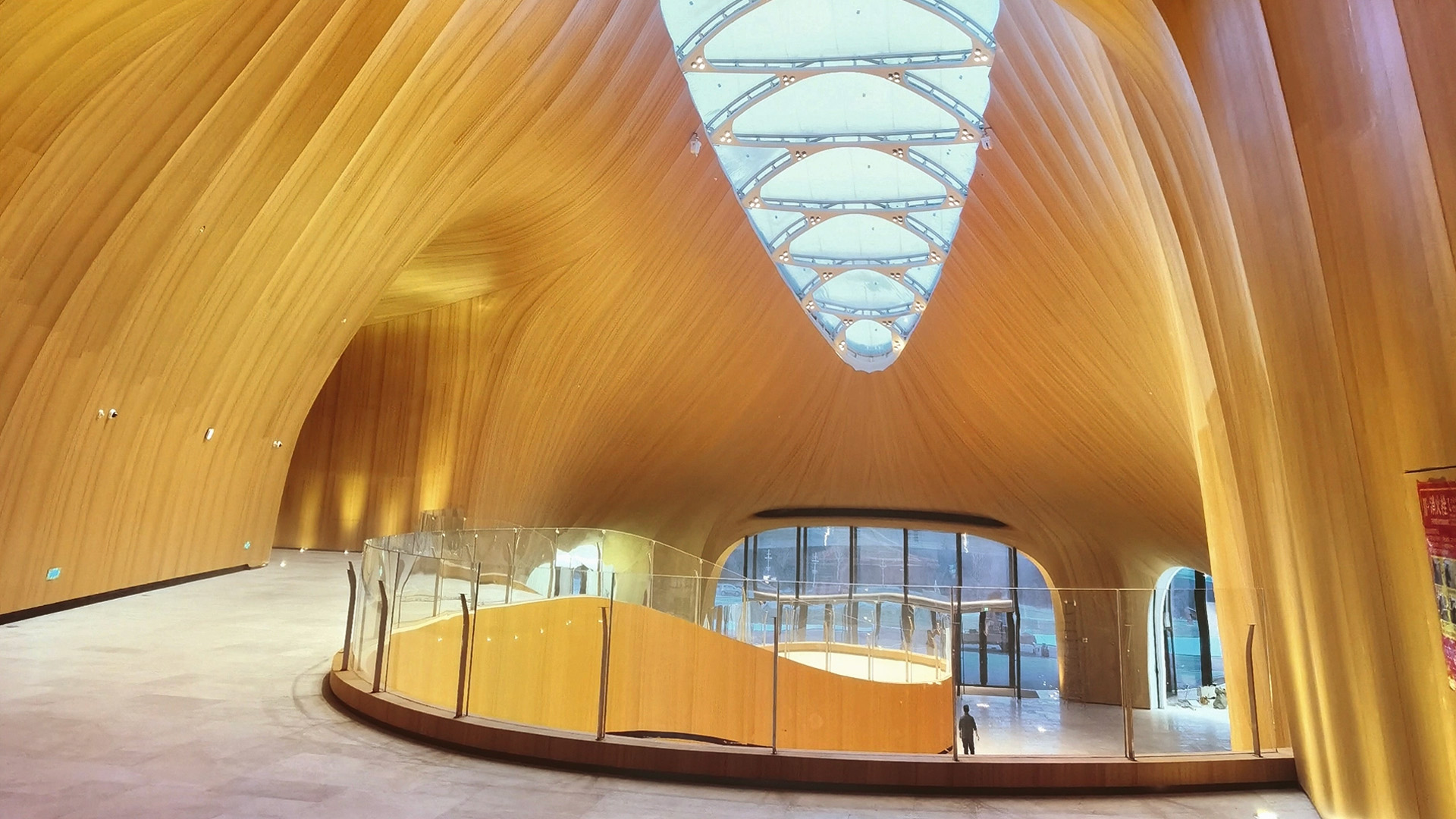 Look Book spotlight: Yabuli Entrepreneur Congress Center
Jacaranda’s Look Book highlights an extreme example of texture at scale in the Yabuli Entrepreneur Congress Center (Public Spaces), designed by MAD Architects and completed in 2017.
The project used SanFoot Eucalyptus Quarter Cut, custom-stained, across approximately 44,000 square feet, directly applied to gypsum (70 to 80 percent microporous) glass-reinforced gypsum board.
Because the design was highly three-dimensional, SanFoot strips of miscellaneous widths and lengths were placed by hand, one by one. This is an incredibly unique application and should be fully discussed in advance before attempting to recreate it.
Design decisions that make the wall feel intentional
Dimensional walls succeed when the texture has rules. Before you draw details, define the strategy behind the surface.
- Strip strategy: a controlled range of widths and lengths, or a tighter module that repeats
- Direction and rhythm: vertical, horizontal, or a flow that follows the architecture
- Density: where texture compresses, where it relaxes, and how it transitions at edges
- Lighting: how grazing light and shadow will emphasize the relief
- Seams and terminations: where joints land, and how corners and returns will finish cleanly
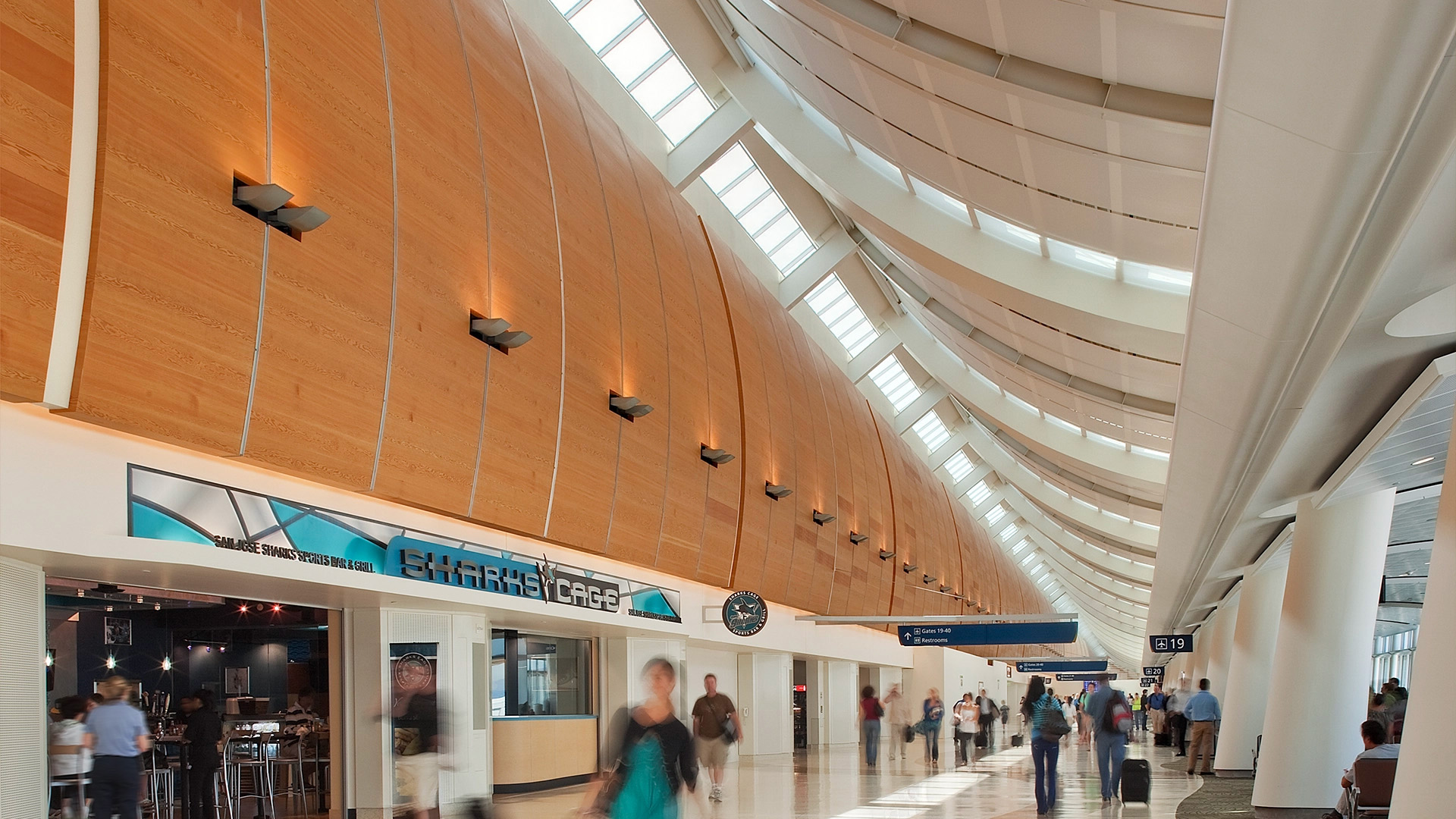 Coordination checklist for a buildable result
To keep the concept buildable, plan these items early:
- A mockup that confirms texture, spacing, finish read, and lighting conditions
- Substrate and wall prep requirements for the chosen installation approach
- A seam plan and sequencing intent for large wall fields
- Edge and transition details at ceilings, bases, corners, and adjacent materials
- Installer pacing guidance so the handcrafted look stays consistent across the full wall
Explore SanFoot and contact Jacaranda for technical guidance on sequencing, installation planning, and specialty dimensional applications like hand-laid strip layouts.