


Sequence matching produces a continuous, flowing grain across a wall by installing veneer sheets in the same order they were sliced from the log. It is one of the most effective ways to give a large surface a single, unbroken natural wood character. The installed result depends significantly on decisions made at the order stage, before anything ships, so understanding what sequence matching requires helps a specification deliver the look it intends.
What Sequence Matching Is
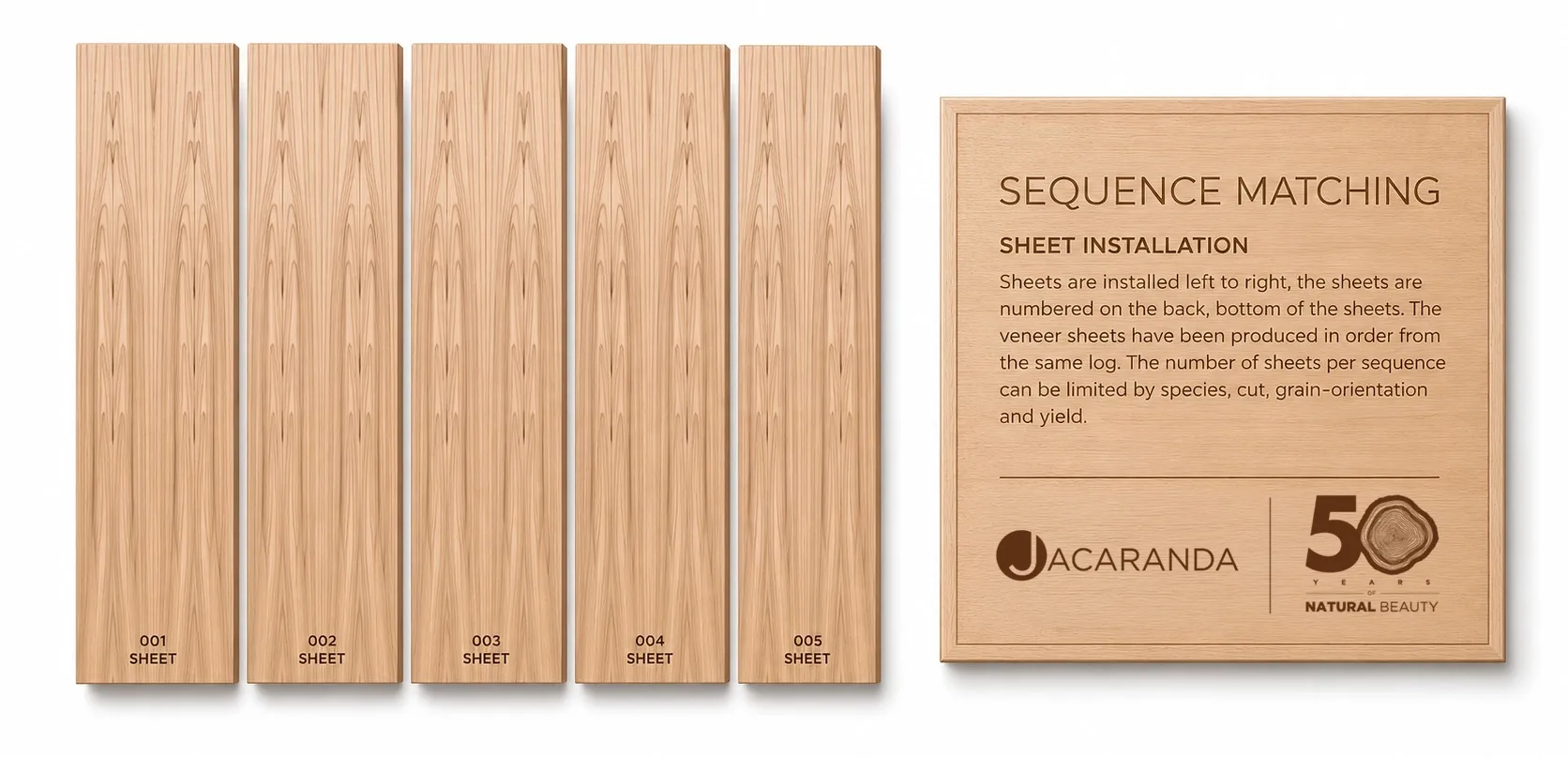
In a sequence-matched installation, sheets are installed left to right, numbered on the back bottom, and taken from the same log in order. Because the sheets follow the log’s natural progression, the grain flows continuously across the wall from one sheet to the next.
This is different from stack matching, where sheets are stacked with consistent leaf widths, and from end matching, where top sheets are flipped to extend the apparent height of a tall panel. Each method produces a different look, and sequence matching is the one that reads as a single continuous run.
What Gets Decided at the Order Stage
The number of sheets available in a single sequence is limited by species, cut, grain orientation, and yield, so the achievable run length should be confirmed early in the process. When a run uses more than two sheets, the matching method needs to be defined on the order rather than left to the installation stage.
Species and cut selection also shape how a sequence reads. A slender-grain species produces a smooth, flowing result across the run, while a bold-grain species produces a more prominent, dramatic effect. Choosing with the intended look in mind keeps the order and the design aligned.
Sequence Matching on a Project
At Yancoal in Sydney, SanFoot Cherry FC covered 8,100 square feet installed in long sequence runs. Because an area that size draws from multiple flitches, the sheets were numbered and installed in order so the grain progressed naturally from one to the next along the corridors, across both walls and doors. For a continuous blueprint match across a run, Recons are the product to specify, since an engineered veneer can repeat a single pattern that natural wood cannot guarantee across multiple flitches.
Before a full installation, a test area of no fewer than three full-width sheets per pattern should be installed and approved by the architect, designer, or owner. For guidance on planning a sequence-matched order, including achievable run lengths and the right match method for your species and cut, contact Jacaranda.