


Warm, grounded wood walls shouldn’t be the element that forces a compromise with code. In high-traffic commercial interiors, the interior finish requirements can narrow the material palette fast, and natural wood is often first on the list to get cut.
SanFoot is our natural wood veneer wallcovering built for that exact pressure point. Its Class A fire rating and multi-standard certifications give design teams a clear path to natural wood surfaces in spaces where the code language decides what gets built.
What Class A really means
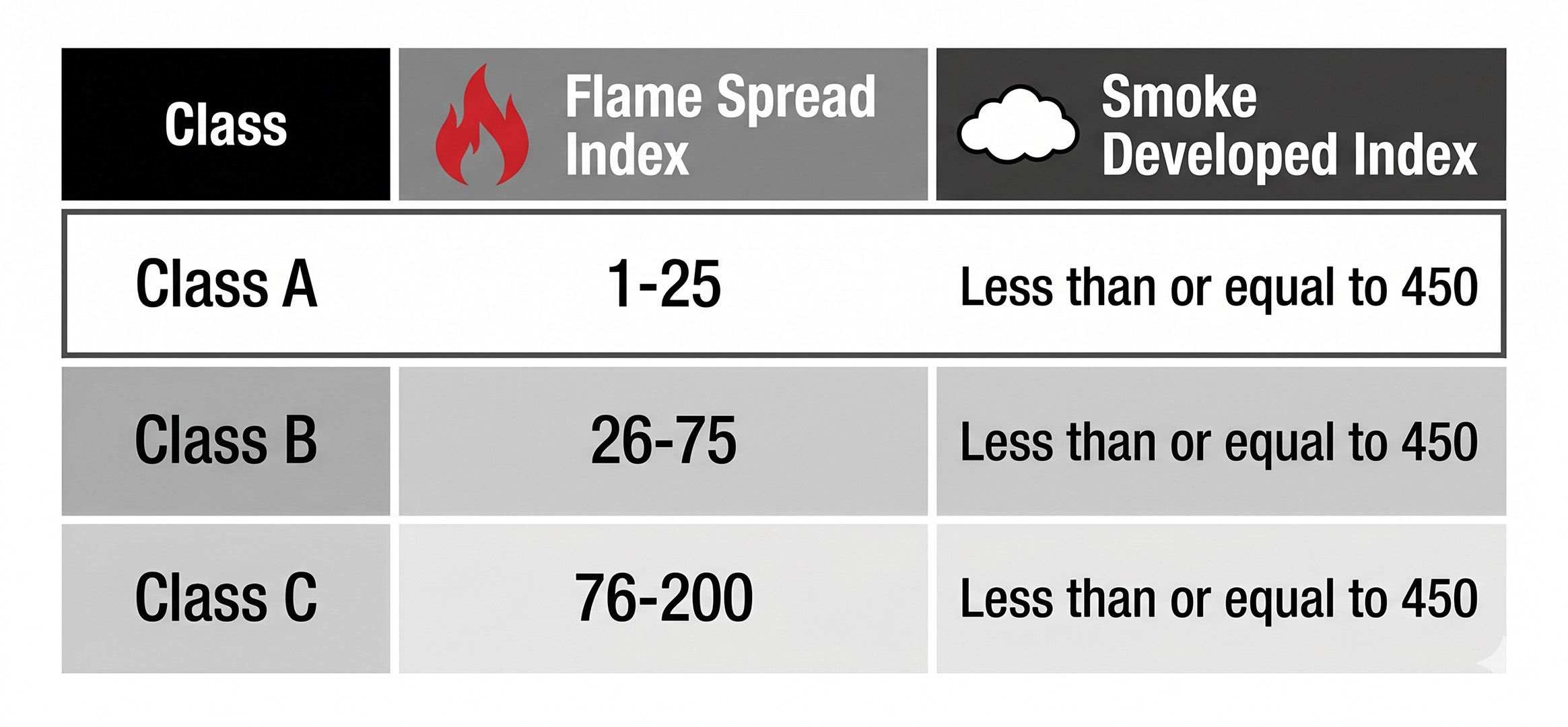
Class A is the top tier of interior finish classification under ASTM E84. The rating is set by Flame Spread Index between 1 and 25, with Smoke Developed Index no greater than 450. Class B covers flame spread 26 to 75, and Class C covers 76 to 200. All three sit under the same Smoke Developed cap of 450.
The SanFoot Test Certificate references NFPA, ANSI/NFPA No. 101 “Life Safety Code” (2006 Edition), and the International Building Code, Chapter 8, Interior Finishes, Section 803.
 How SanFoot meets the requirements
SanFoot is tested Class A per ASTM E84-12 when installed to gypsum, metal, and other fire-retardant cores using approved adhesives. The documentation reaches further than single-standard compliance:
- NFPA 286 room-burn acceptance: meets the criteria for interior wall and ceiling finishes under the IBC, and is accepted as an alternative to ASTM E84 in both the IBC and NFPA 101
- Canadian compliance: conforms to the National Building Code of Canada per CAN/ULC S102-10
- European compliance: rated B-s1, d0 under EN13501-1, the highest reaction-to-fire classification in that system
Those ratings apply across the same prefinished 5-ply SanFoot sheets and 100-plus species and cuts that specifying teams already plan around.
Where code-driven projects lean on SanFoot
Natural wood veneer reads as warmth and craftsmanship, and the interiors that need that quality most are often the same interiors with the tightest finish rules. Hospitality, retail, healthcare, corporate, and transportation interiors are all listed as intended applications for SanFoot, and each one carries its own code environment into the project.
Performing arts work can push the specification even further. At the Lincoln Center for the Performing Arts, SanFoot Moabi Quarter Cut was direct-glued to metal fire doors. The material can carry beyond wall applications when the assembly calls for it.
Spec checklist for a Class A wood-wall install
Before detailing, align a few decisions early so the fire rating carries cleanly into the field:
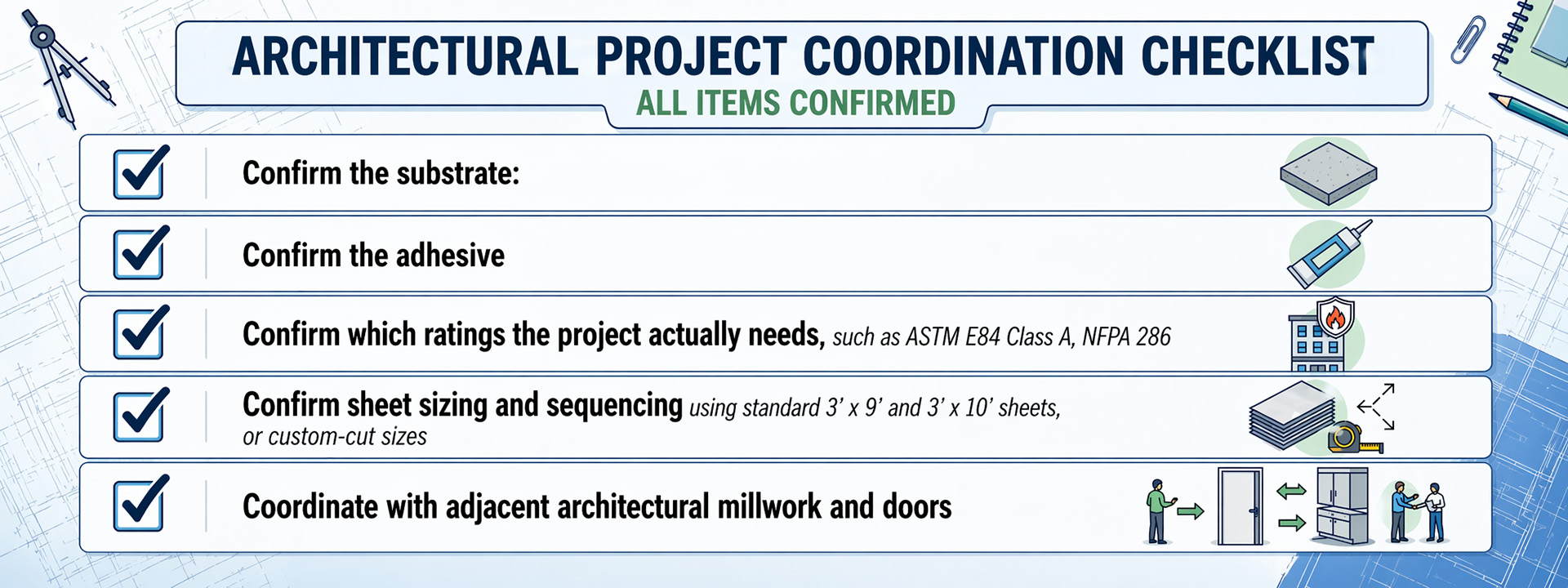
- Confirm the substrate: gypsum, metal, or another approved fire-retardant core, per the SanFoot ASTM E84 install condition
- Confirm the adhesive: specify from the approved list so the Class A rating is preserved
- Confirm which ratings the project actually needs, such as ASTM E84 Class A, NFPA 286, or a Canadian or European equivalent, so the right test certificate travels with the submittal
- Confirm sheet sizing and sequencing using standard 3′ x 9′ and 3′ x 10′ sheets, or custom-cut sizes, planned against seam locations on hero elevations
- Coordinate with adjacent architectural millwork and doors so the wood palette reads continuously from wallcovering to casework to fire-rated openings
Review SanFoot’s fire-rating documentation and contact Jacaranda for guidance on selecting the species, substrate, and install method that aligns with the code language driving your project.