

We developed SanFoot with a specific goal: to get more veneer from each log, with less waste and a minimum impact on the environment. That commitment shapes how we select trees, how we slice, and how we manufacture. The result is a product that lets specifiers put natural wood veneer across walls, ceilings, and architectural surfaces in quantities that would not be feasible with conventional slicing methods.
Wood is the only building product that is both renewable and constantly growing. Our manufacturing process is built around protecting that advantage.
The 300% Yield Advantage
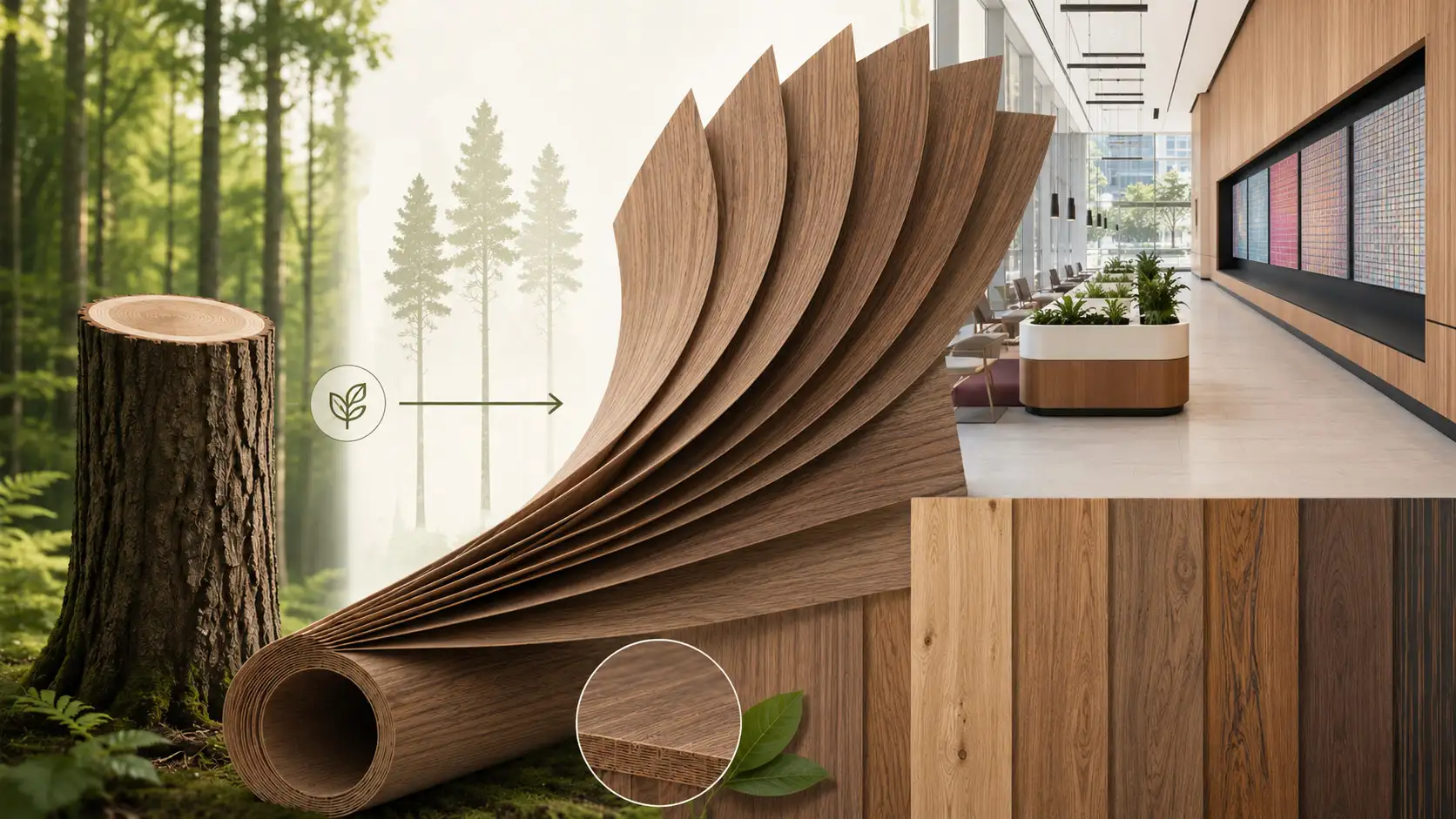
Our patented process for slicing veneer increases the log’s yield by approximately 300 percent. The same volume of veneer that once required three trees now comes from one, which changes the scale at which natural wood veneer can be responsibly specified.
The method also produces larger sequence runs and matching color flitches. For specifiers who need grain and color consistency across a large installation, that is a direct and practical benefit.
How the Manufacturing Process Supports That Commitment
Wood waste from our production generates all the electrical energy needed to run our manufacturing facilities. No formaldehyde is added at any point in the process, and our plant operates as a formaldehyde-free facility. SanFoot has also been tested under California Department of Public Health (CDPH) standards for VOC compliance and holds MAS Certified Green accreditation.
Every shipment is checked for compliance with the CITES International Trade Treaty, which prohibits trade in endangered species. We select individual trees with that standard in mind.
The Certifications Behind the Claim
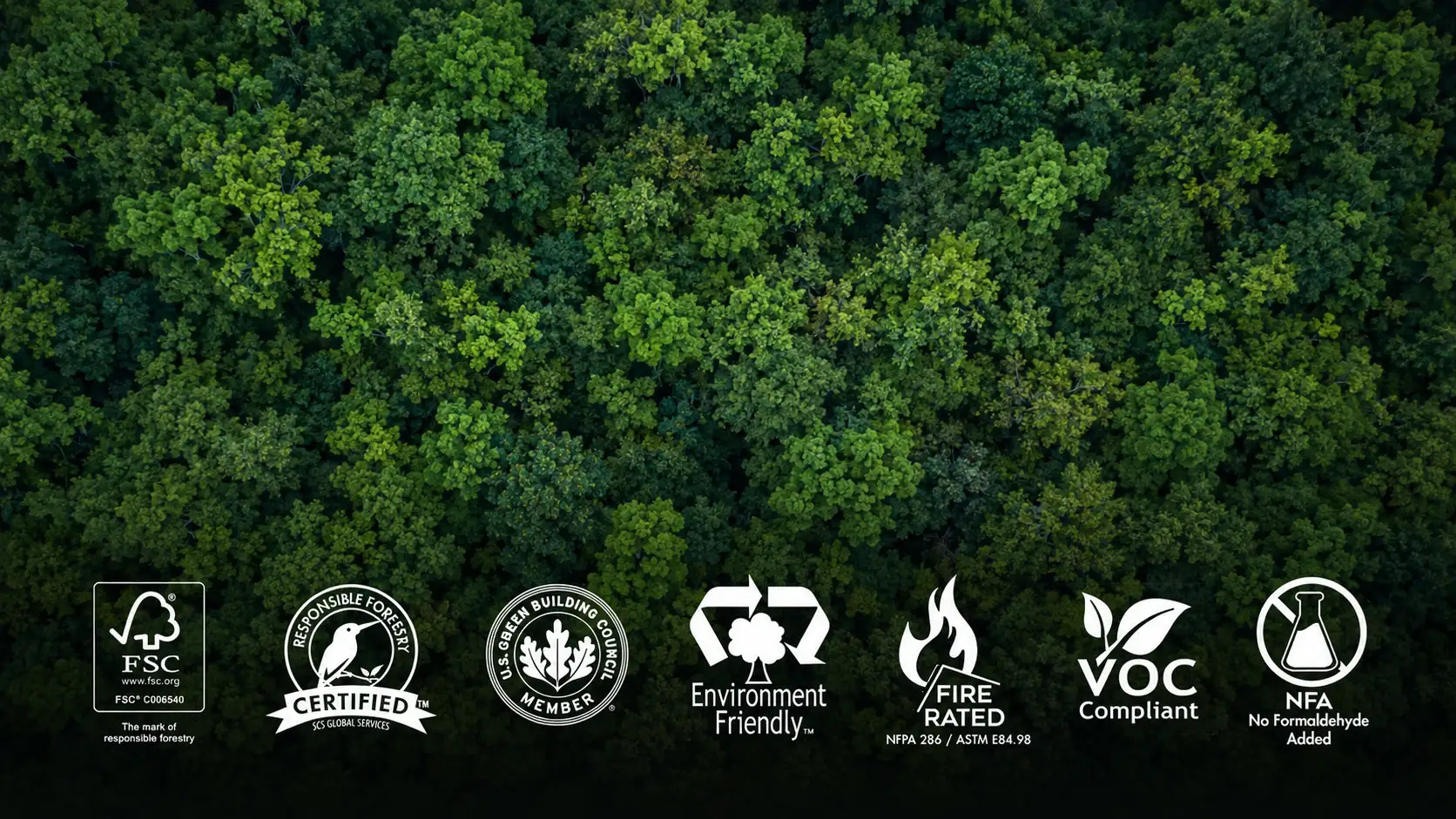
Jacaranda holds Forest Stewardship Council (FSC) certification for our sourcing practices. FSC certification means the forestry behind the product supports no net loss of forest over time, with protections in place for vulnerable habitats, at-risk species, and community rights. FSC is available on most of our Recons patterns, which use FSC Plantation Poplar as the base material.
We also publish an Environmental Product Declaration (EPD) for SanFoot, which communicates verifiable, accurate environmental information about the product and its applications. Our Life Cycle Assessment (LCA) documents the environmental impact of SanFoot from raw material sourcing through end of life. Jacaranda is a proud member of the U.S. Green Building Council.
Specifying with Documentation in Hand
Projects that require LEED contributions, sustainability reporting, or documented environmental credentials can draw on the full record of SanFoot’s certifications. Our EPD and LCA are available for submittal purposes.
To review our environmental documentation or get guidance on incorporating SanFoot’s certifications into a project specification, contact Jacaranda for guidance.